Announcement
Admissions Open for Session 2026-27 (Nursery to Class 8)Special Coaching Batches for AMU, JMI, Sainik School, and Vidyagyan!Call Admissions Desk at +91 9412137554Submit Online Form to reserve your evaluation seatAdmissions Open for Session 2026-27 (Nursery to Class 8)Special Coaching Batches for AMU, JMI, Sainik School, and Vidyagyan!Call Admissions Desk at +91 9412137554Submit Online Form to reserve your evaluation seat
View Process →
Home /Blog /Vidyagyan Admission Guide
Admissions & Test PrepUpdated July 2026

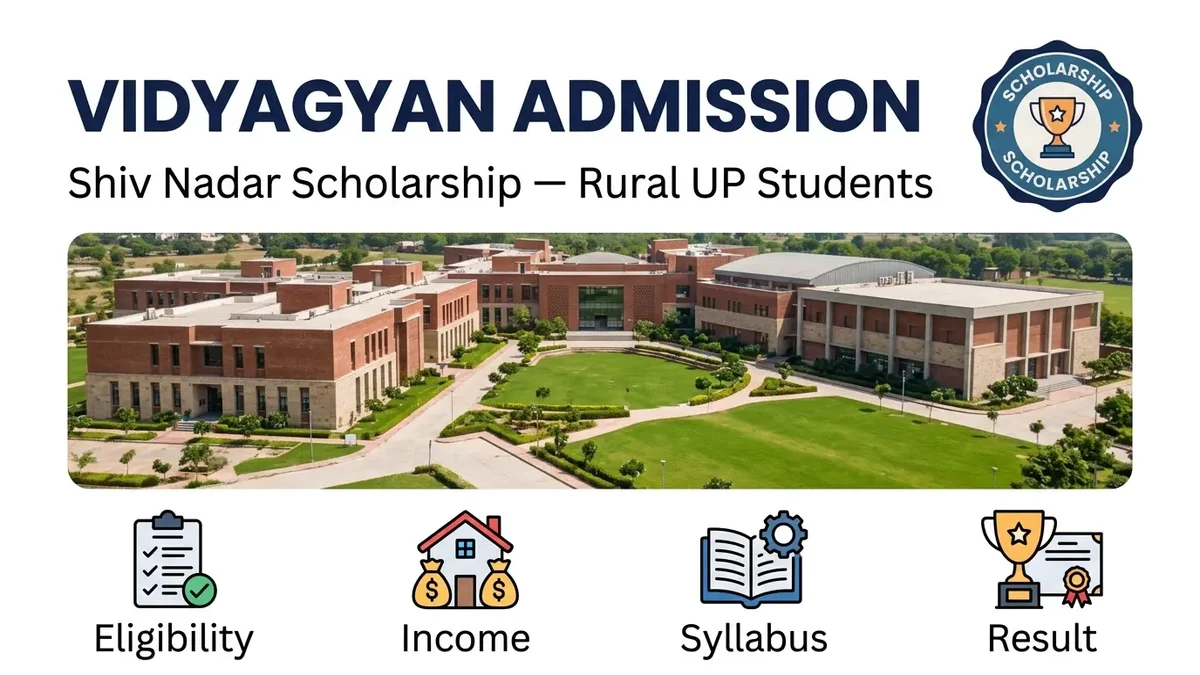
Vidyagyan School Admission 2027: Rural Eligibility & Complete Guide

?? Date: July 4, 2026?? Author: Neha Singh?? Read time: 6 mins
Parent and counselor having a serious discussion with a student about Vidyagyan admission

You sit quietly after putting your child to bed, thinking about their future. A relative mentions Vidyagyan Schools - free world-class education for deserving rural students in UP. Hope rises in your heart. This could transform your bright child's life completely.

set up by the Shiv Nadar Foundation, Vidyagyan Schools offer a life-changing opportunity for rural children in Uttar Pradesh. The academy provides free, world-class boarding education. But securing a seat requires meeting tough eligibility rules and a competitive two-stage exam process.

What Is Vidyagyan School Admission?

Vidyagyan Schools are boarding academies set up by the Shiv Nadar Foundation in Uttar Pradesh. They provide free, world-class education for bright rural students from economically weaker sections.

The admission process identifies talented girls and boys from rural backgrounds through a tough selection procedure. Successful candidates receive completely free education including academics, boarding, healthcare and all-round development.

Vidyagyan Schools aim to build future leaders by combining academic excellence with character building, sports and arts education. The life-changing impact creates change-makers who contribute back to their communities and the nation.

Who Can Apply: What Are the Eligibility Rules and Dates for 2027?

Age and Class Rules

  • Must reside in and study in recognized rural school within Uttar Pradesh
  • Family income must be less than ?1,00,000 per annum
  • Must be studying in Class 5 during application year 2026-27
  • Age Limit: Girls: 10-11 years, Boys: 10-12 years as of March 31, 2027
  • Must satisfy medical fitness standards for boarding schooling

Important Dates 2027

EventDate
NotificationOctober 2026
Application opensNovember 2026
Last date to applyDecember 2026
Admit cardJanuary 2027
Exam date (Stage 1)February 2027
Result (Stage 1)March 2027
Exam date (Stage 2)April 2027
Final ResultMay 2027

Always check the official Vidyagyan website for final dates: vidyagyan.edunet.foundation

What Will Your Child Study � What Is the Syllabus?

Section-wise Topics

Mental Ability

  • Patterns and series
  • Analogies and classifications
  • Coding-decoding
  • Logical reasoning
  • Spatial awareness

This section tests problem-solving and logical thinking abilities

Mathematics

  • Number systems and operations
  • Fractions, decimals and percentages
  • Measurement and geometry
  • Data handling
  • Word problems and practical math

Focus on speed, accuracy and conceptual clarity

Language (Hindi/English)

  • Reading comprehension
  • Grammar and vocabulary
  • Sentence correction and rearrangement
  • Comprehension passages

Strong language foundation supports all other learning

Exam Pattern Table

Exam StageFocus AreaMarks
Stage 1: Preliminary ExamTests basic Language, Math, and Mental Ability100 marks
Stage 2: Mains ExamEvaluates deep concept understanding and logical reasoning200 marks
Total300

Stage 2 carries more weightage and tests deeper understanding

How to Prepare � What Is the Step by Step Plan?

Step 1: Understand the eligibility criteria

Check that your child meets all eligibility rules: rural residence in UP, family income below ?1 Lakh per annum, and studying in Class 5. Keep documents like residence certificate, income proof and school bonafide ready today.

Step 2: Build strong foundations

Focus on NCERT Class 5 Mathematics concepts first - numbers, operations, fractions, measurement. Practice daily mental math for 15 minutes to improve speed. Clear basics before moving to complex problems.

Step 3: Develop reading skills

Read one Hindi/English passage daily and summarize it in your own words. Learn 5 new words with meanings and usage each day. Practice grammar exercises focusing on tenses, parts of speech and sentence correction.

Step 4: Develop reasoning skills

Solve 15-20 reasoning puzzles daily covering patterns, analogies and classifications. Use puzzle books or mobile apps designed for logical thinking. Make it fun by solving together as family activity.

Step 5: Practice with sample papers

Solve sample papers and previous year questions weekly to understand exam pattern. Time yourself to build exam temperament. Analyze mistakes to improve weak areas systematically.

Step 6: Stay healthy and positive

Make sure your child gets enough sleep, good food and physical activity. Keep a stress-free home environment. Celebrate small improvements and keep preparation enjoyable rather than burdensome.

What Are the 5 Mistakes Parents Must Avoid?

  • Mistake 1: Missing eligibility details
    Many parents overlook specific requirements like rural residence proof or exact income limits. Double-check all criteria including documents needed. Create a checklist today to make sure nothing is missed.
  • Mistake 2: Starting preparation too late
    Beginning just 2-3 months before exam leaves insufficient time for concept building. Rushed learning creates gaps in understanding that show during tough questions. Start at least 6-8 months prior for steady preparation.
  • Mistake 3: Neglecting mental math practice
    Speed and accuracy in calculations are crucial for qualifying exams. Ignoring regular mental math practice leads to time wastage and errors under pressure. Practice mental math daily using fun methods and games.
  • Mistake 4: Overlooking language development
    Strong Hindi/English foundation is essential for understanding questions and expressing answers. Neglecting language practice affects performance across all sections. Read daily and practice vocabulary building regularly.
  • Mistake 5: Excessive pressure on child
    Constant scolding for low practice scores creates fear and reduces learning capacity. High stress affects concentration and memory retention. Maintain positive, encouraging atmosphere focusing on effort rather than just results.

People Also Ask

Q: Can urban students apply for Vidyagyan School?

A: No. Vidyagyan Schools strictly admit only highly bright students hailing from rural backgrounds in Uttar Pradesh.

Q: What is the income criteria for Vidyagyan admission?

A: The candidate's family income must be strictly less than ?1,00,000 per annum to be eligible for admission.

Q: What is the age limit for Vidyagyan School admission?

A: For girls: 10-11 years, for boys: 10-12 years as of March 31, 2027. your child must be studying in Class 5 during application year.

Q: Is there any fee for education at Vidyagyan Schools?

A: No. Education, premium boarding, uniforms, textbooks, and medical care are entirely funded by the Shiv Nadar Foundation. There are no hidden fees.

Q: How many months of preparation are needed for Vidyagyan admission?

A: You need at least 6 to 8 months of preparation. Focus on mental math, reading comprehension and logical reasoning for best results.

Vidyagyan School Admission 2027 represents a life-changing opportunity for bright rural students in Uttar Pradesh. The combination of free world-class education, all-round development and helping grow environment creates future leaders. Careful attention to eligibility and timely preparation are essential for success.

If you live in Amroha, Joya, or nearby areas of UP, Jai Govind Public School (jgps.in) offers coaching for this exam. Call +91 9997161490 to know more.

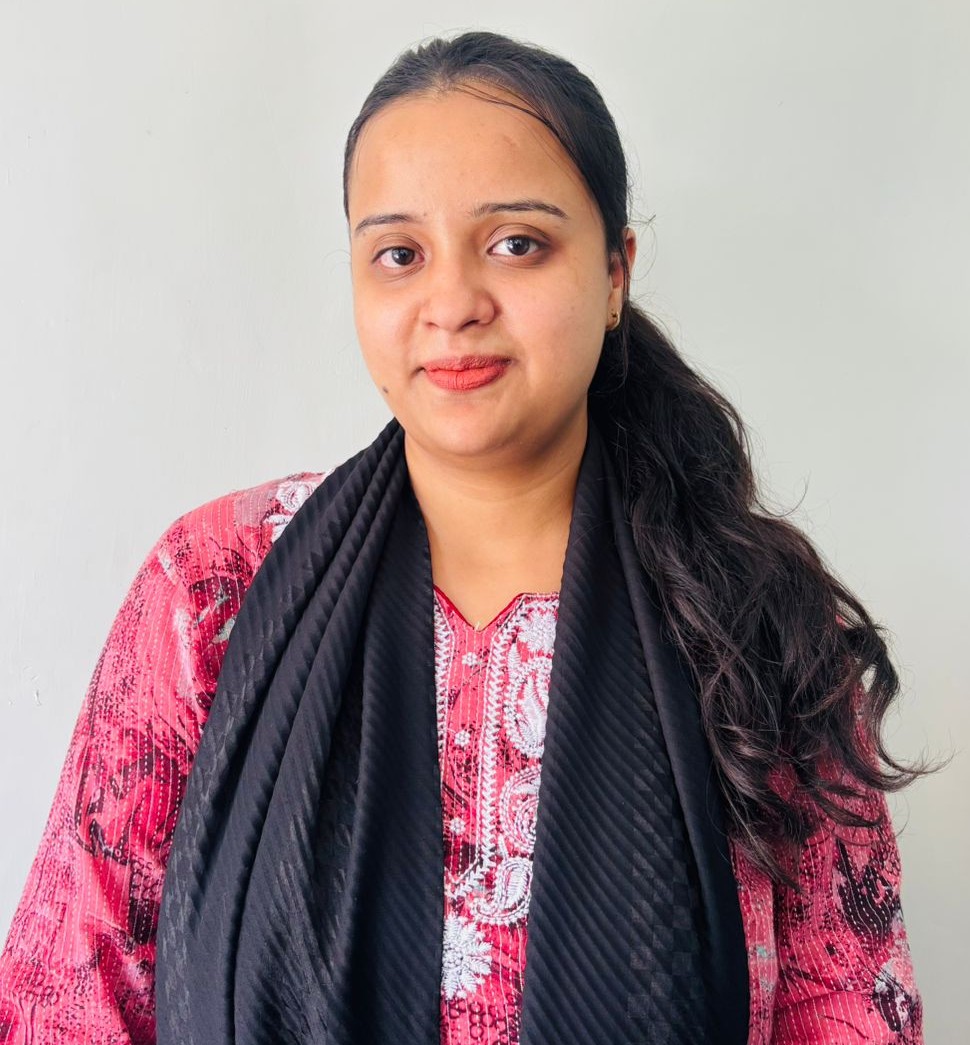
Neha Singh

Neha Singh

Study Habits Expert, JGPS

Neha develops effective study schedules, pomodoro techniques, and active recall methods to help students retain information efficiently without burnout.

View Full Profile